Climate change bill: already big, and the interest is building up
Blog
Climate: The Theme That Stays, Whatever You Call It
Climate has been on the agenda for years. And yet, for many organizations, it still feels like something external, something that happens to them. Something to react to, rather than something to steer by. We see it differently. Climate is not a compliance theme. It is a strategic issue that touches how an organization creates value, now and in the future.
The World Is Changing Faster Than Expected
The three-year average temperature exceeded the 1.5°C threshold for the first time, the limit set in the 2015 Paris Agreement. Johan Rockström, director of the Potsdam Institute for Climate Impact Research, said at the World Economic Forum Annual Meeting 2026: "We are at a truly decisive moment. Time is running out, but it is not too late."
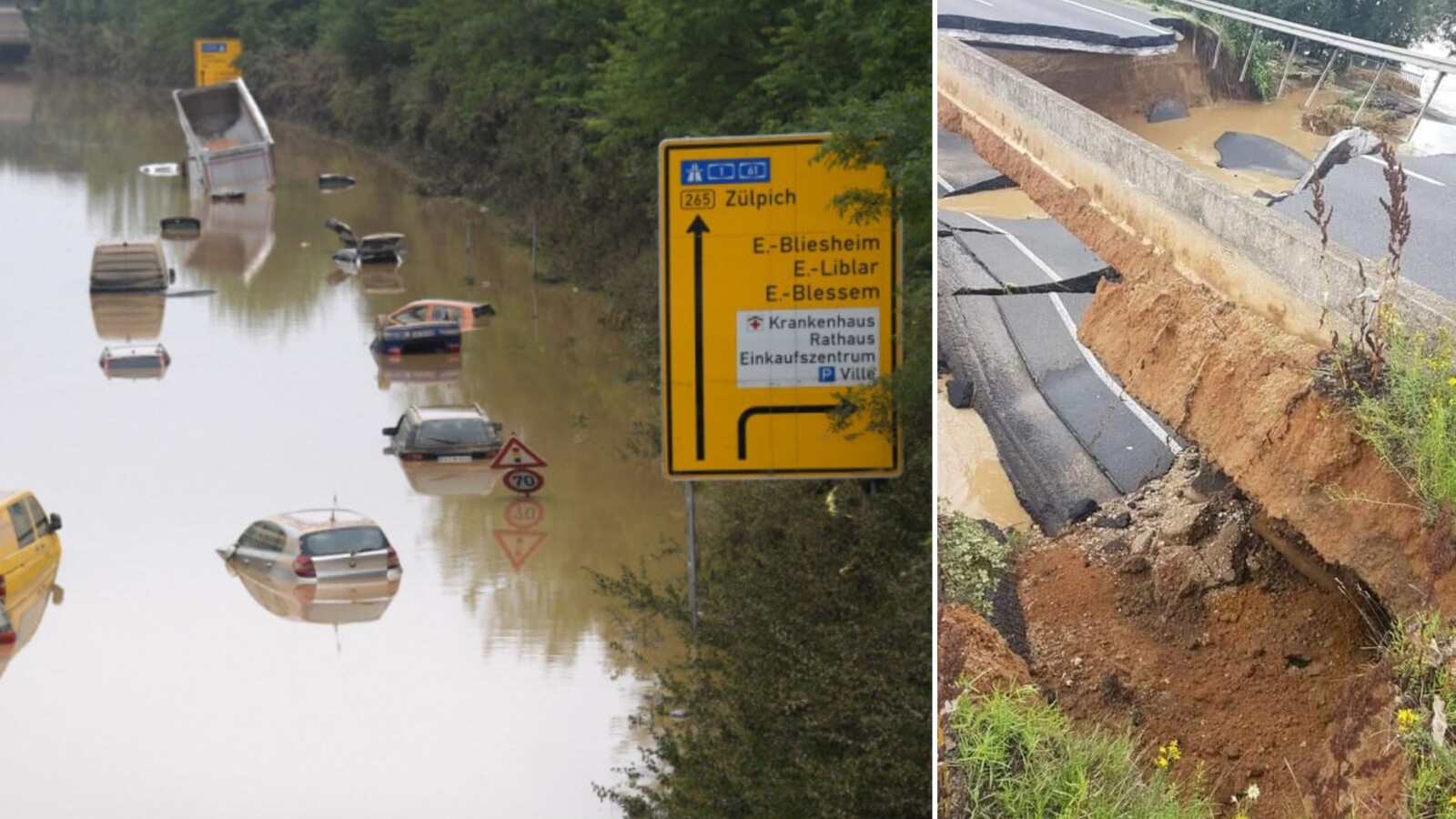
The consequences are being felt close to home. The summer of 2026 broke nearly all drought and heat records in Europe. Insurers are processing the damage from major wildfires. Supply chains stalled due to low water levels. Harvests are failing. These are no longer future scenarios. This is now. It's personal for me too: in my own surroundings, where I grew up in Erftstadt, Germany, it became clear back in July 2021 just how close climate change really is. In Erftstadt, entire neighborhoods were swept away by catastrophic flooding, and thousands of people had to leave their homes overnight. And there are of course many more examples like this.
Climate Is Getting a New Language
In a world of geopolitical uncertainty, the question is increasingly being asked differently: no longer "how do we become more sustainable?" but rather "how do we become more independent and resilient?"
The Strait of Hormuz, at its narrowest barely 33 kilometers wide, is the hinge point of global energy supply. More than 20 million barrels of oil pass through it daily, accounting for roughly 25% of global seaborne oil trade. The IMF warns that disruptions here could push global economic growth down to 2.5%.¹
Energy independence, autonomy, food security, supply chain resilience: these are the new languages in which climate is spoken. Sanda Ojiambo, CEO of the UN Global Compact, put it this way: "Responsible business is resilient business."⁴
Regulation: Is the Pressure Easing or Increasing?
The answer is: both, and that's what makes it complex. The EU Omnibus has weakened or delayed the CSRD for many companies, but regulatory pressure hasn't disappeared. The EU Carbon Border Adjustment Mechanism (CBAM), which ties CO2 costs to certain imports into the EU (steel, aluminum, cement, fertilizer, hydrogen, and electricity), entered its definitive phase on January 1, 2026. The Green Claims Directive requires companies to scientifically and independently substantiate and certify their environmental claims in advance, in the fight against greenwashing.
Indirect pressure is increasing too: suppliers are being asked for climate data, the CO2 Performance Ladder is being required in public tenders, and financiers are making climate questions standard practice. The strategic necessity isn't going away.
The Business Case: Sustainable Energy Pays Off
More than 90% of all new renewable energy projects worldwide generate electricity at a lower cost than the cheapest new fossil fuel alternative. Every dollar invested in renewable energy creates three times as many jobs as the same investment in the fossil fuel industry.²
Yet we're also seeing a different signal. In 2026, fewer companies are investing in sustainability than in 2025, down from 68% in 2024 to 61% in 2026. This confirms what we see every day: the ambition is there. Translating it into practice remains difficult. And that is exactly where the opportunity lies.
The Cost of Doing Nothing
Waiting often feels like the safe option, but it comes at a price. Most Dutch companies now have a basic picture of their direct emissions (Scope 1 and 2). The real blind spot lies in Scope 3: the indirect emissions in the value chain, at suppliers and in the use of the company's own product. Scope 3 typically represents 70 to 90% of a company's total CO2 impact. Anyone without visibility here isn't just missing numbers, they're missing sight of concrete risks.
- Procurement risks (upstream). Suppliers facing stricter regulation or CO2 pricing will pass those costs on. If you don't make your supply chain more sustainable, your procurement costs will rise unexpectedly.
- Market and product risks (downstream). Consumers and business customers increasingly demand climate-neutral or low-emission products. If the use phase or waste processing of your product has high emissions, you risk losing market share to competitors.
- Financing risks. Banks and investors increasingly assess companies on their full chain emissions, not just their own operations. Without Scope 3 insight, you risk a lower ESG rating, which can lead to higher interest rates or even exclusion from capital.
In short: a CO2 figure that stops at your own factory gate or office door gives a distorted, overly rosy picture. The risks that most affect continuity and cost price are precisely the ones hidden in the chain.
What's Next in This Series
In the coming blogs, we'll go deeper into how to translate climate into concrete action. Climate is the theme that stays, whatever you call it. The question isn't whether it's relevant to your organization, but how you go about addressing it. At TOSCA, we're happy to think this through with you.
In the coming weeks, we'll share the following blogs with you:
Blog 2: Climate resilience analysis: five tips
Blog 3: Climate transition plan: from ambition to a credible plan
Blog 4: Calculating emissions and setting targets
Blog 5: GHG removal & carbon credits: when does compensation make sense?
We help companies turn CO2 ambitions into concrete plans, from the first anuual report to a fully worked-out roadmap to net zero. Reach out if you want to discuus in more detail and I'd be glad to think with you. Get in touch via ulrike@toscatibe.nl.
Sources
1: IMF, April 2026
2: UN Secretary-General, 2026, UN Global Compact
3: CBS, "Fewer companies investing in sustainability again," July 2026
4: from her Annual Letter, January 2026