Culture as an anchor for sustainability
BLOG
During this time of the year, companies set goals for the next year. How important are sustainability goals in this cycle? Several AEX-listed companies have watered down their climate and sustainability goals or even abandoned them completely, the Financieele Dagblad (FD) reported earlier this year. These sustainability goals are partly driven externally by regulations but must also be supported within companies in order to achieve them. Credible steps towards sustainability require clear values, consistent choices and committed people. A clear message about your goals and how to achieve them to internal and external stakeholders is essential.
Sustainable business requires people who not only come together to set goals, but who also provide resources and build a culture to achieve these ambitions. After decades of focus on effectiveness, turnover and financial performance, the question remains whether companies succeed in making sustainability a real part of their culture. With the FD findings in mind, we examined how AEX-listed companies report on their corporate culture in their first CSRD reports. We mainly looked at companies that name "corporate culture" as a material topic. Do we find indications of a culture in which sustainability is anchored?
Corporate culture material for only 38.5% of the AEX companies
By means of a double materiality assessment, companies investigate which topics are important (i.e. material), because of the impact of the company on people and the environment, or because of the impact of developments on the company. A very strategic assessment, which is also mandatory within the CSRD. Our analysis shows that not all AEX companies consider corporate culture to be a material topic – even business conduct is not interpreted as such everywhere. Yet every annual report describes their company culture in some way. We did see a pattern: companies that consider corporate culture as a material topic mention it more often on average.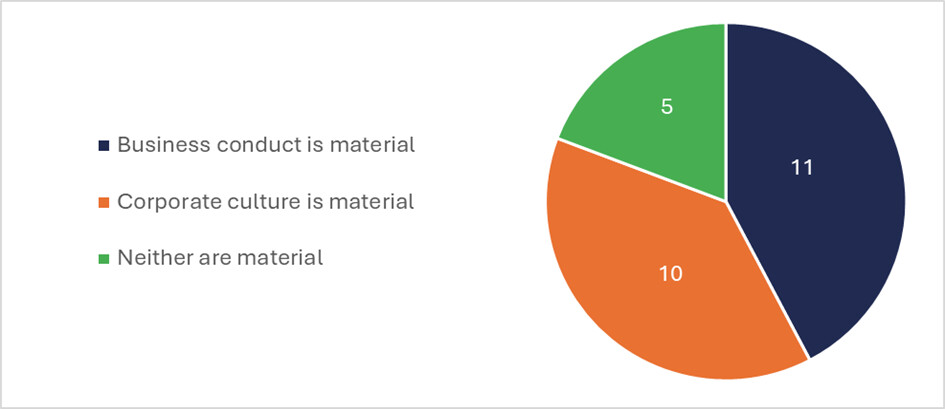
Figure 1. Number of companies that consider corporate culture or business conduct to be a material topic
Companies that have business conduct as a material topic mention culture an average of 48 times in their CSRD-report. For companies that mention corporate culture as a material topic, this rises to an average of 68 times. The five companies that do not consider both topics to be material mention culture only 32 times on average. Companies that see corporate culture as a material topic are therefore more inclined to explicitly name the culture. But does that also lead to a better alignment with the core values?
Culture and core values: little cohesion, limited attention to sustainability
How do the AEX companies describe their culture in their report? They often mention social sustainability topics such as integrity & accountability or health & safety. However, sustainability topics about the environment and long-term value creation are at the bottom of the list, just above safety.
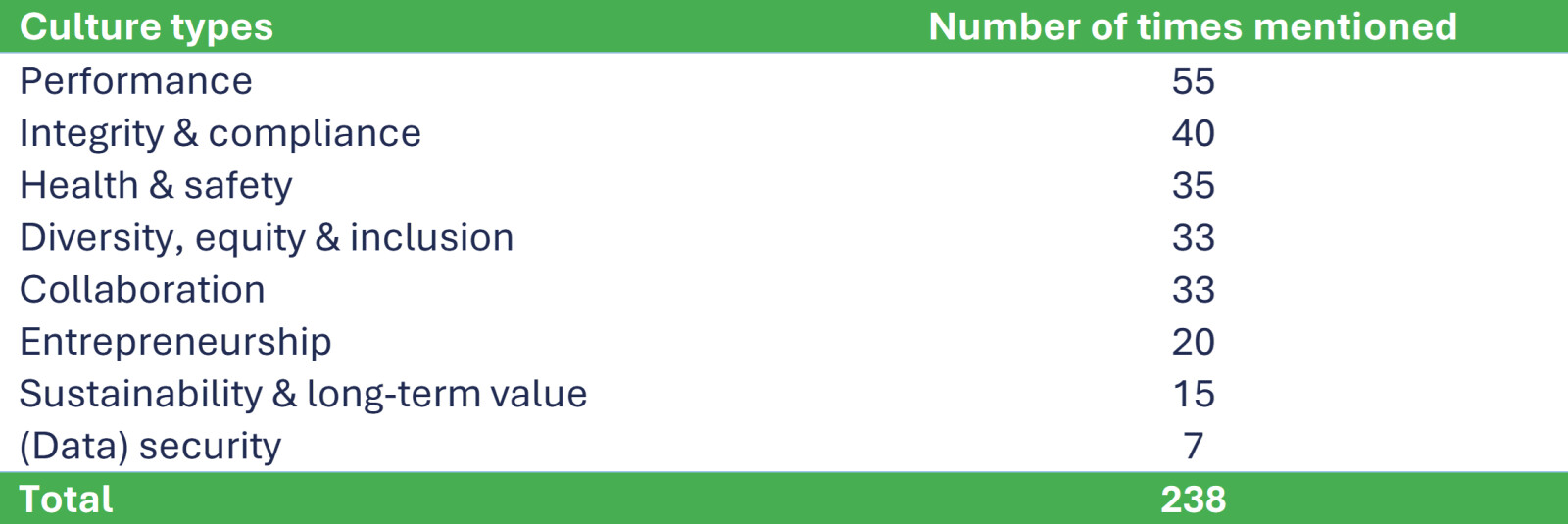
Table 1. Unique culture descriptions by all AEX companies
We also examined the core values of these companies – important carriers of culture. What is striking: in many cases, these values do not match the way companies describe their culture in the annual report. This applies both to organizations that designate culture as a material topic and to companies that do not.
Materiality of corporate culture, therefore, does not guarantee substantive coherence. In fact, most of the core values are remarkably generic. Many companies mention values such as "we deliver", "we innovate" or variants such as "we achieve results" and "we think ahead". Such terms give little direction to behavior or decision-making, certainly not in the field of sustainability.
The company that, in our opinion, has best integrated corporate culture in its annual report is one of the youngest AEX companies: Adyen. Throughout the report, Adyen's core values, focused on performance and entrepreneurship, are frequently linked to the descriptions of the culture. Not necessarily linked to sustainability, but very consistently implemented.
Social sustainability topics such as "Diversity, Equity & Inclusion (DEI)" or "Health and Safety" are often described as part of the corporate culture, but are almost not reflected in the core values of the AEX companies. This shows that sustainability is unfortunately still hardly anchored in the value base of companies – and therefore not in their daily decisions.

Table 2. Core values and descriptions of all AEX companies
Do we think it is out of the question that performance-oriented cultures still predominate? Not necessarily. Achieving sustainable goals is all about performance and requires people and cooperation. Intrapreneurship and innovation are also essential to offer new solutions to make existing processes more sustainable. In short, these current performance and innovation-oriented corporate cultures and values could help to achieve sustainability goals. But then there must be ambitious goals and unfortunately the FD article shows that this is not yet the case.
Sustainability does not start with reporting
Sustainability starts with inspiration and awareness. It requires internal leadership, shared beliefs and the formation of sustainability coalitions that create movement from within. With this conscious management, through both formal practices (such as clear objectives, systems, processes and rules) and informal practices (such as behavior, beliefs and stories), sustainability slowly but surely becomes part of your corporate culture. Some examples:
- Tell stories – Stories make sustainability tangible. It is an informal way of sharing expectations, beliefs and vision. This way you explain your sustainability ambitions in a recognizable way to both internal and external stakeholders.
- Train employees and leaders – For a culture change focused on sustainability, you need both employees and leaders. Employees develop the skills to make sustainable choices through training and education. At the same time, leaders need support to consciously include sustainability in their decision-making.
- Improve cooperation in the chain – Every organization is part of a broader chain. By mapping out your entire business operations, you work in a targeted way to improve your sustainability impact. In this way, you increase the resilience of the entire value chain of which you are a part.
Without goals, clear management and cultural anchoring, sustainability remains an ambition on paper. What goals do you set for next year? And what is needed in culture to make it happen? As TOSCA, we like to think along with you, whether it's about setting the goals or ensuring that the culture supports these goals.
Back to news