Embedding sustainability in organizational culture
Our study State of the Sustainable Transition 2026, conducted with Change Inc. and Impact Centre Erasmus, reveals a noticeable gap. Decision-makers rate their own organization’s progress on the sustainable transition at 6.6 out of 10, and the Netherlands as a whole at 5.5. A closer breakdown shows another pattern: the higher up the hierarchy, the more optimistic the view of the transition. That is a problem, because strategic choices are made at the top. Leadership mainly sees ambition and progress, while people on the ground also see the processes that are stalling.
Of all organizations, 83 percent have sustainability goals. That sounds promising, but 56 percent barely measure their impact, if at all. And when asked whether leaders are held accountable for those goals, 30 percent say no and another 30 percent say only to a limited extent. Just 19 percent feel that managers are truly held to account. This exposes the core of the problem: in many organizations, sustainability is part of the strategy but not yet part of the culture. And whatever does not carry real weight in performance reviews, rewards, and decision-making tends to lose out to short-term goals. So the question is, how to embed sustainability in your organization?
To embed sustainability in everyday processes and choices, you start with organizational culture: the way people in your organization do things, based on shared values and expectations. Culture shapes behavior and decisions and gives your organization its identity — the sense of how do we work together? How do we make decisions?
So what is a sustainability culture? It is a culture in which striking a sound balance between making a profit, ensuring equal opportunity, and respecting the environment is taken for granted. In organizations with a strong sustainability culture, people think and act accordingly, supported by the organization. Culture takes shape along two paths. The informal side is what is lived: role modeling, stories, habits, and what colleagues expect of one another. The formal side is what is written down: policies, goals, roles, and processes. The two reinforce each other. Often, policy codifies what has already grown informally, but a new process or a new obligation can just as easily set behavior in motion.
Find out where you stand with the Embedding Scan
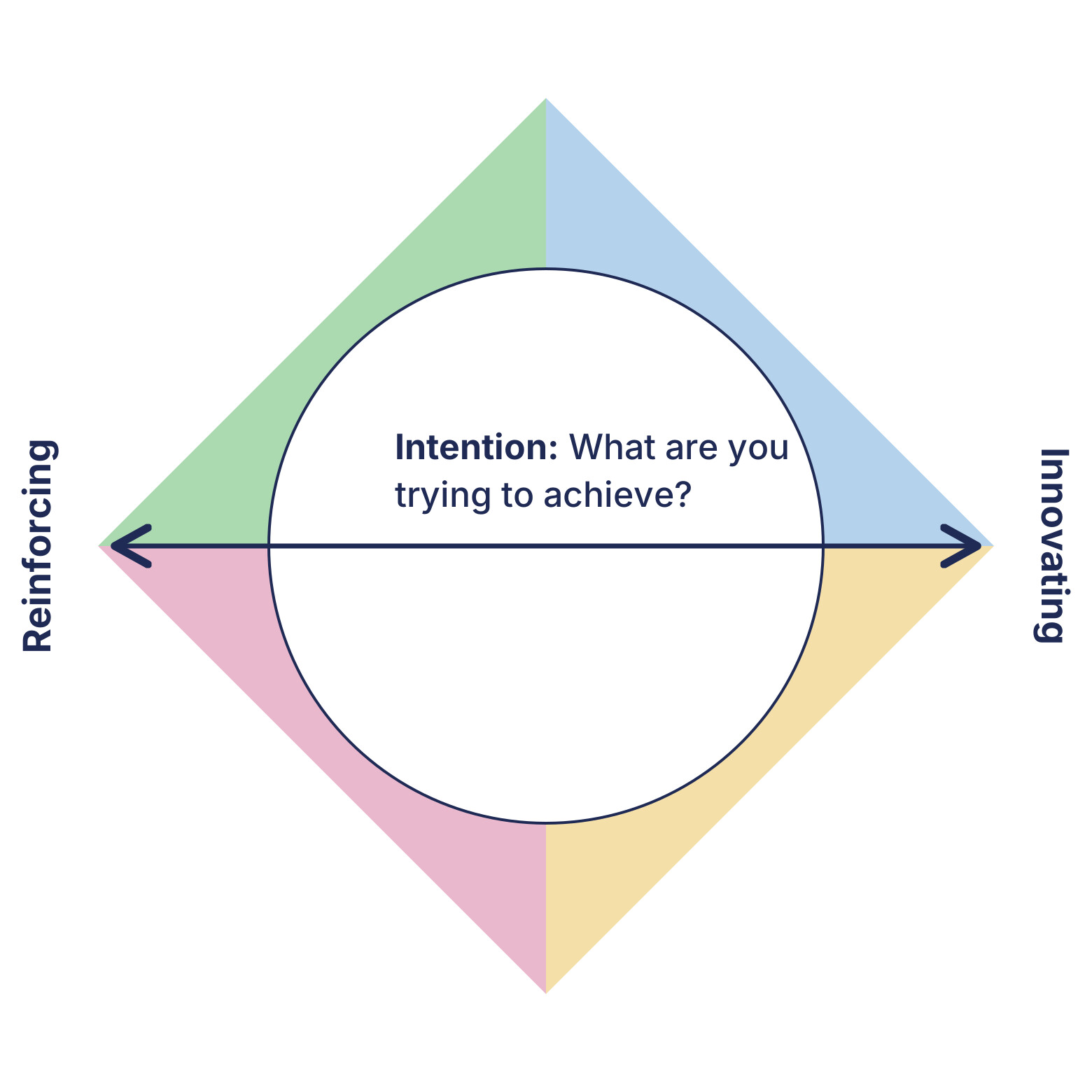
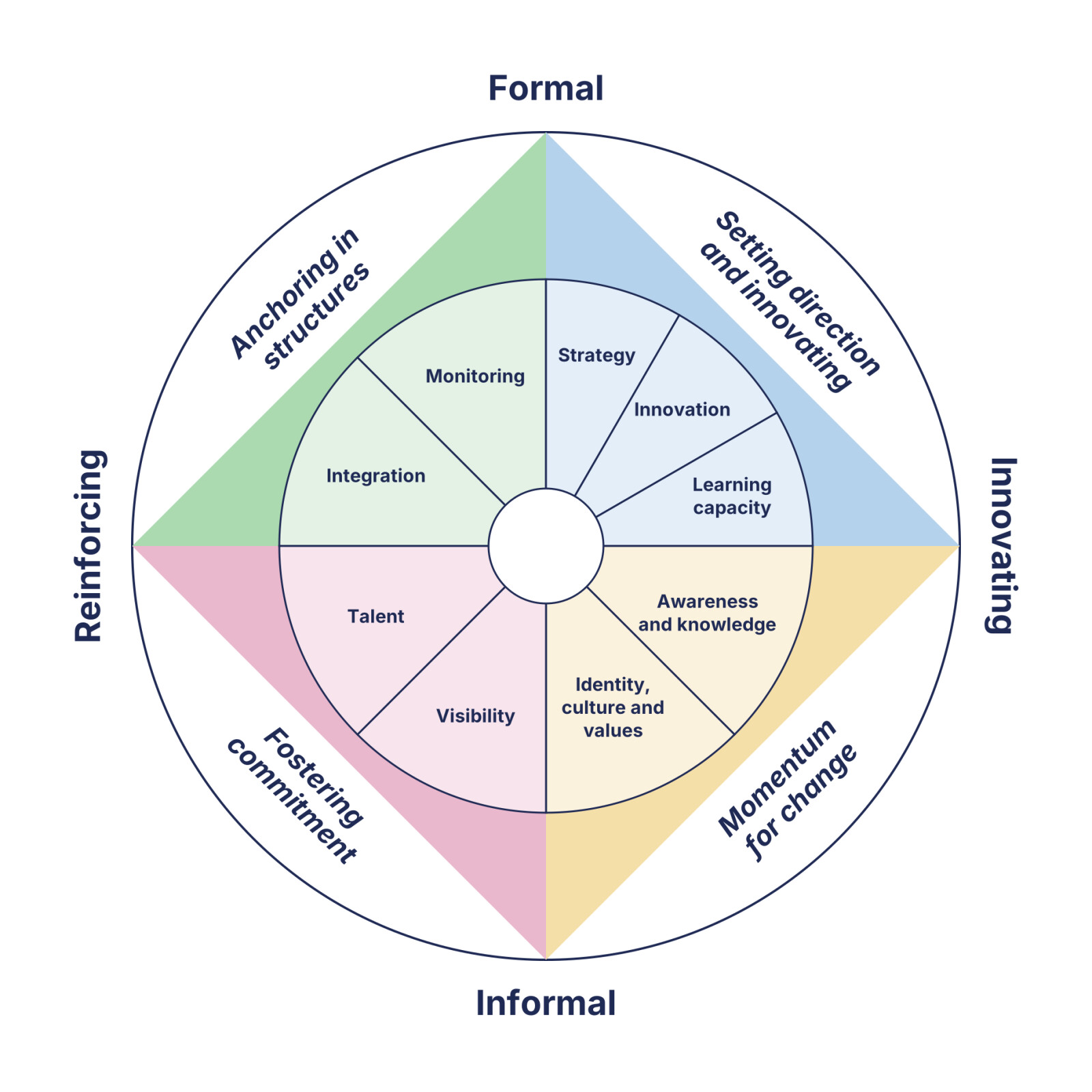
To help with this, we use the Embedding Scan, a practical tool inspired by the work of the Embedding Project, developed by Dr. Stephanie Bertels of Simon Fraser University and Dr. Jess Schulschenk of Stellenbosch University. The Embedding Scan is built around 45 practices and provides insight based on two questions:
1. What are you trying to achieve?
Each practice serves one of two aims:
- Reinforcing – Practices that help deliver on existing sustainability goals and commitments.
- Innovating – Practices that create room for experimentation, improvement, and long-term sustainable innovation.
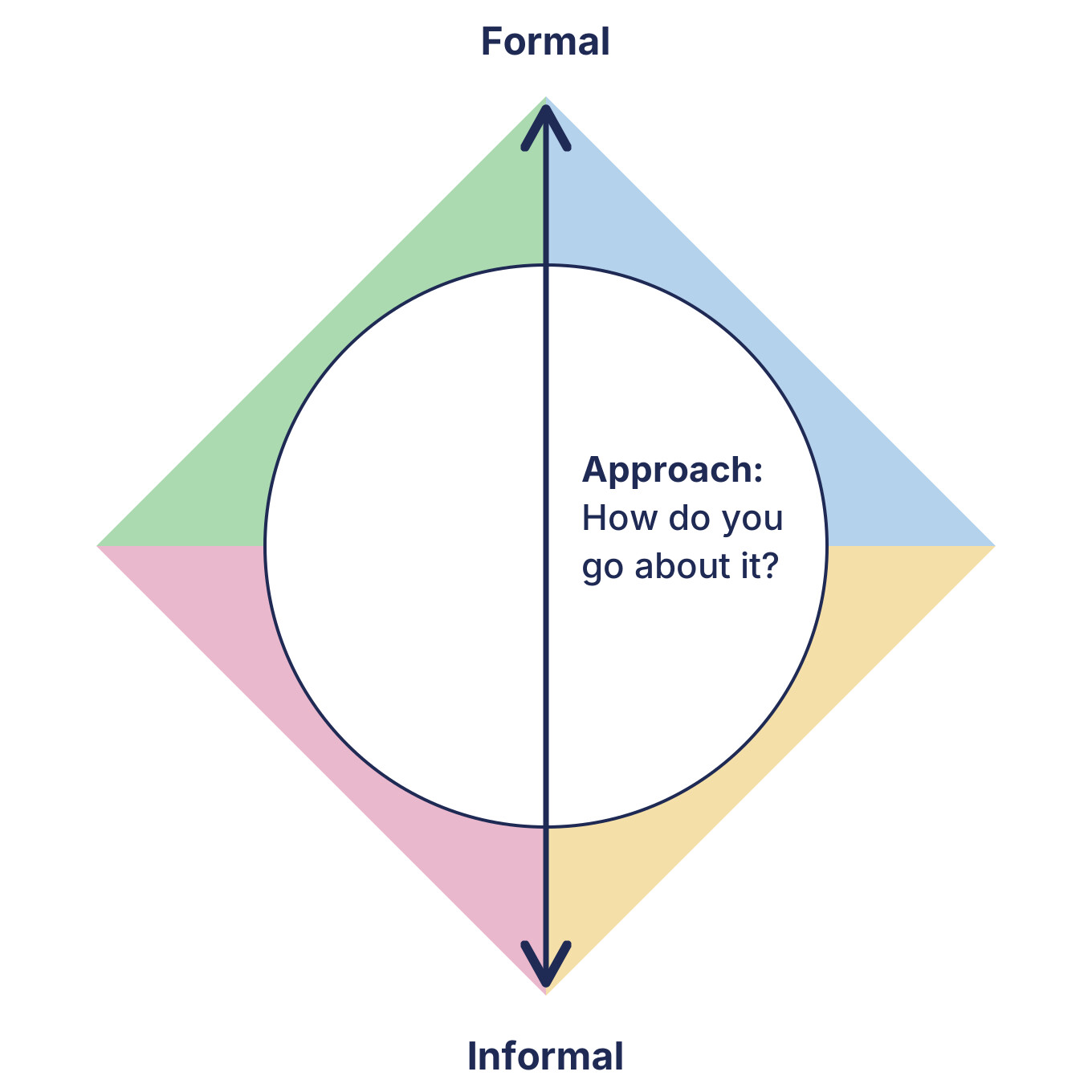
2. How do you go about it?
Practices can also be grouped by approach:
- Formal – Formal culture-building guides behavior through rules, systems, and procedures. The aim is to capture informal values and habits in documents such as codes of conduct, operating procedures, training, and programs.
- Informal – Cultural elements such as stories, leadership, habits, and social norms that influence behavior without being written down. Informal culture-building happens through shared values and behavior. Through example, experience, and conversation, habits emerge that support sustainability goals.
Four types of practices that shape your culture
Together, these two dimensions (intention and approach) form a framework with four types of practices:
- Setting direction and innovating (Formal/Innovating)
Structures and programs that stimulate innovation, such as room to experiment or partnerships. - Momentum for change (Informal/Innovating)
Encouraging curiosity, creating the space and courage to try new things, and role modeling that makes innovation possible. - Fostering commitment (Informal/Reinforcing)
Leadership behavior, symbols, or rituals that reinforce existing sustainability policy. - Anchoring in structures (Formal/Reinforcing)
Policies, KPIs, reporting, and management systems that ensure existing goals are met.
Why this works
Cultural change grows out of what people do every day and what the organization sets down in policies and processes. Which side moves first differs from one organization to the next. Behavior without structure disappears as soon as its champions leave, and structure without behavior remains a reality on paper only. The Embedding Scan gives you the insight to build a stronger sustainability culture in a targeted way, one that fits your organization and its context.
Curious where your organization stands?
We’d be glad to think it through with you. Get in touch for an introductory conversation or a no-obligation walkthrough of the Embedding Scan. Ulrike de Jong | +31 6 5107 2464 | ulrike@toscatribe.nl